

When you search for the best tankless water heater in Canada, you want one thing: unlimited hot water every time you turn on the tap, without the constant worry of your unit breaking down two years from now.
However, upgrading to the right high-efficiency tankless water heater is also one of the most effective ways to lower your utility bills and reduce your carbon footprint. According to Natural Resources Canada (NRCan), water heating accounts for roughly 17% of the average Canadian home’s energy use.
At Hot Water Ottawa, we’ve installed thousands of tankless water heaters across the region. Our team knows which brands deliver reliable, long-lasting performance and which ones leave homeowners stuck with “lemon” units.
We built this guide to help you compare the top brands side-by-side, allowing you to choose a high-quality unit with absolute confidence.
Table of Contents:
- Navien vs. Rinnai vs. Bosch vs. Noritz vs. Vesta vs. IBC
- What Is A Tankless Water Heater?
- How Does A Tankless Water Heater Work?
- Benefits Of Installing A Tankless Water Heater
- How Long Do Tankless Water Heaters Last?
- Tankless vs. Heat Pump Water Heater
- Gas. vs. Electric Tankless Water Heaters
- What Size Tankless Water Heater Do I Need?
- Tankless Water Heater Maintenance Tips
- Should I Choose Condensing Or Non-Condensing Tankless Water Heaters
- Are Tankless Water Heaters Energy Efficient?
- 6 Of The Best Tankless Water Heater Brands
Navien vs. Rinnai vs. Bosch vs. Noritz vs. Vesta vs. IBC
Choosing the best tankless water heater in Canada starts with understanding how the top brands stack up.
The comparison table below gives you a quick overview of performance, cost, efficiency, and warranty coverage for the six brands we install and service at Hot Water Ottawa.
| Name | Performance (BTU/h) | Avg. Cost | Avg. Efficiency (UEF) | Most Efficient System | Most Cost Friendly | Warranty |
| Navien | 150,000–199,900 | $$ | 0.95–0.96 | NPE-210A2 | NPE-180A2 | 15-year / 5-year |
| Rinnai | 160,000–199,000 | $$ | 0.93-0.95 | RSC Series | RUCS Series | 12-15 years / 5-year |
| Bosch | 175,000–199,000 | $$ | 0.93–0.95 | Greentherm 9000 | Therm 830 ES | 15-year / 5-year |
| Noritz | 180,000–199,900 | $$ | 0.96–0.98 | NRCR Series | EZ Series | 15-25 years / 5-year |
| Vesta | 199,000 | $ | 0.95–0.96 | VRP Series | VRS Series | 15-year / 5-year |
| IBC Technologies | 199,000 | $ | 0.89–0.95 | SFT 199-1 | Standard SFT Series | 15-year / 5-year |
Note: Costs are relative indicators ($, $$, $$$) rather than exact prices, as installed costs vary based on your home’s configuration, gas line requirements, and venting setup. Contact Hot Water Ottawa for a personalized quote.
1. Navien
Navien is a reputable brand known for its advanced tankless water heater technology and energy-efficient solutions. Their units are among the most cost-effective options available, thanks to impressive energy-efficiency ratings and smart technology integration.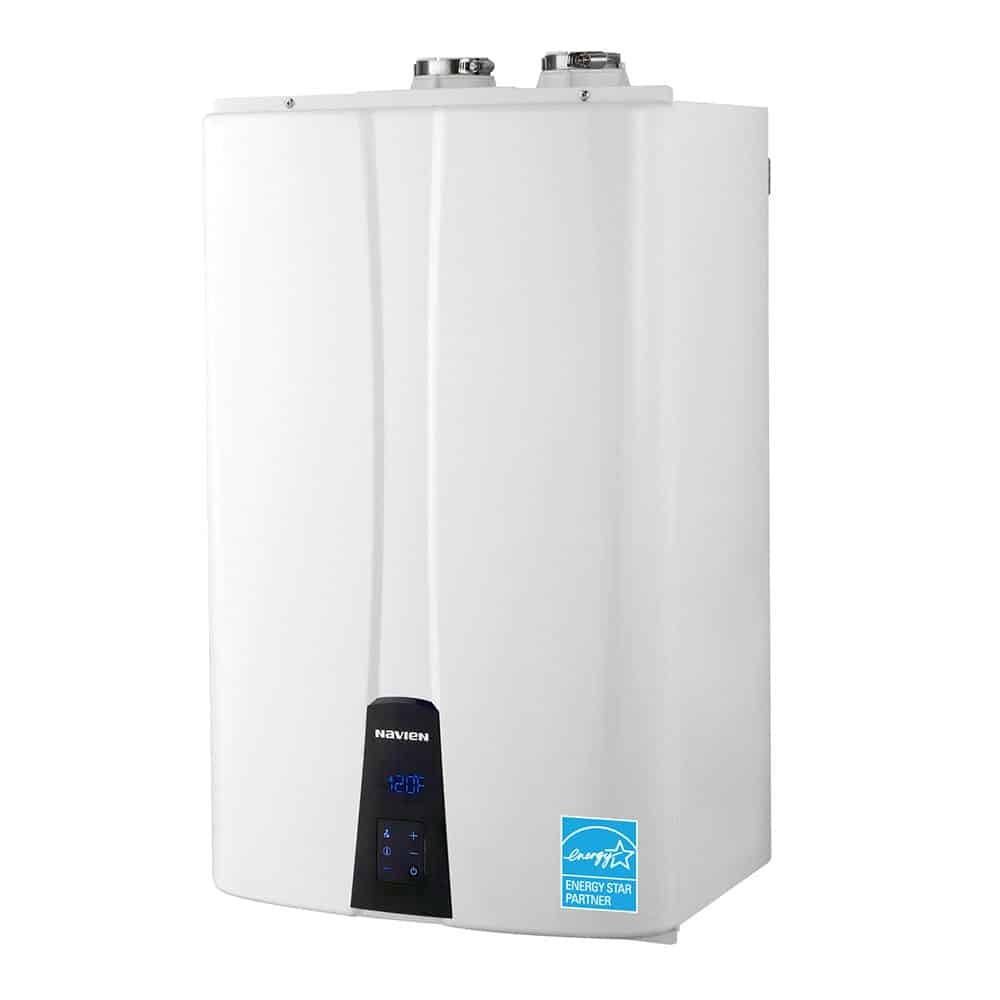
Key Features
- Field convertible gas system for flexible installation.
- Ultra-condensing efficiency to maximize heat output.
- Dual stainless steel heat exchangers for durability and corrosion resistance.
- Low NOx emissions (20ppm) for environmental compliance.
- 2” PVC venting supported up to 75 feet.
- ComfortFlow built-in recirculation system.
Top Model Recommendations
For those prioritizing maximum efficiency, the NPE-210A2 is the premier choice. It features a 97% AFUE rating and utilizes innovative condensing technology to capture waste heat that would otherwise be lost. If budget is the primary concern, the NPE-180A2 offers a more cost-friendly alternative. It delivers reliable performance with a 150,000 BTU/h capacity at a more accessible price point for homeowners.
2. Rinnai
Rinnai is a market leader offering high-performance units that balance efficiency with long-term durability. Their systems focus on user comfort through digital controls and smart recirculation technology.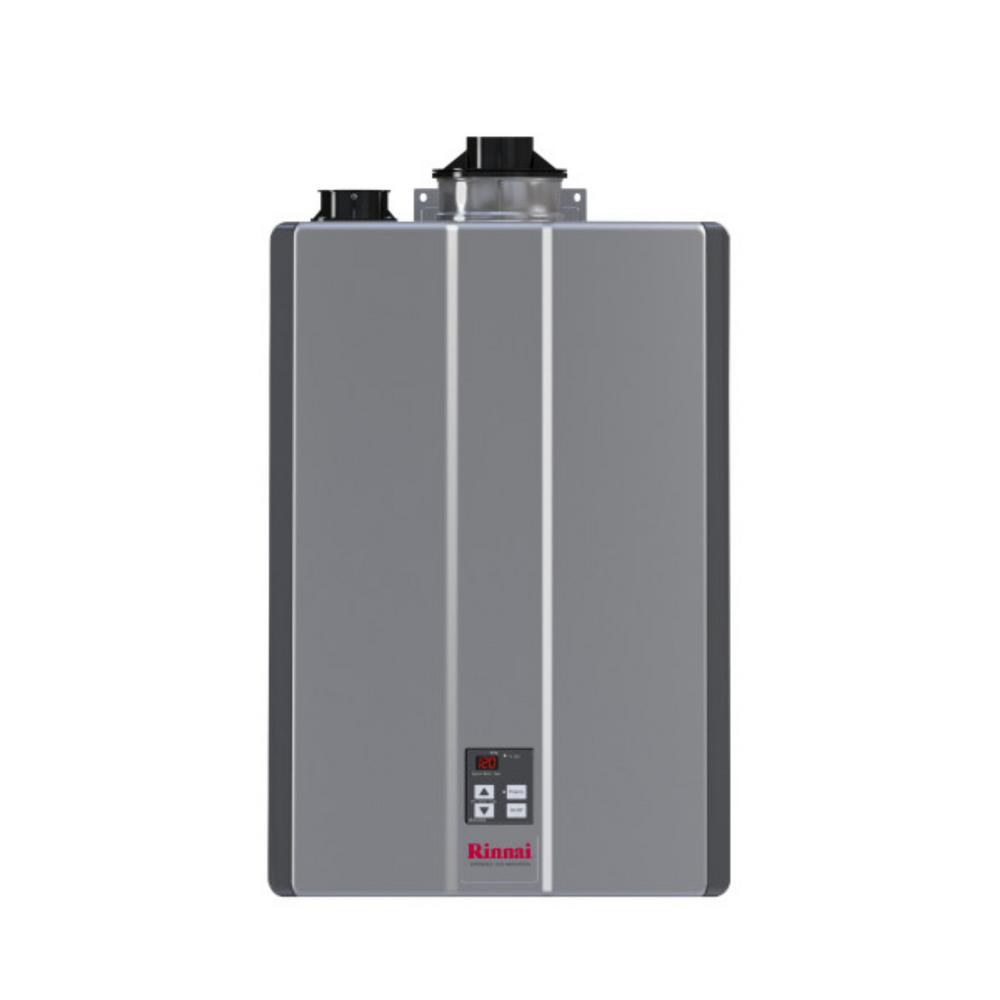
Key Features
- Sleek, modern design suitable for various installation environments.
- Energy Star™ certified for guaranteed energy savings.
- Smart-Circ™ Intelligent Recirculation™ technology.
- Longevity: Designed to last up to twice as long as traditional tank heaters.
- Isolation valves are included for extra protection and easier maintenance.
- Fuel Versatility: Compatible with both natural gas and propane.
Top Model Recommendations
Rinnai’s RSC Series stands out as its most efficient option, boasting a 0.91 UEF and an Energy Star rating. It preheats incoming water by capturing waste heat, making it highly environmentally friendly.
For a more economical entry into the Rinnai line, the RUCS Series provides a budget-friendly option. This series focuses on 160,000 BTU performance and long-term savings without sacrificing the brand’s signature quality.
3. Bosch
Bosch is a trusted global brand committed to innovation and space-saving design. Their tankless systems are ideal for both residential and commercial applications where space is limited but high performance is required.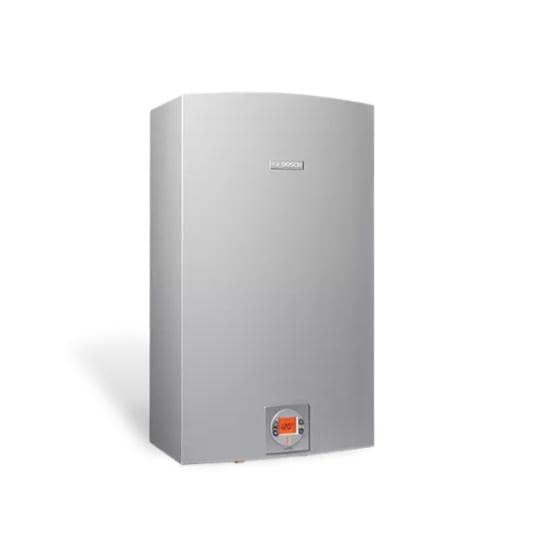
Key Features
- Space-saving design: Compact, state-of-the-art aesthetics.
- Ultra-efficient condensing technology with UEF ratings up to 0.95.
- Connectivity: Wi-Fi accessory and dedicated App for increased functionality.
- Ease of Installation: Top water connections are designed for easy tank replacement.
- Ultra low NOx Certified.
- Scalability: Non-condensing options can link up to 24 units.
- Digital display for precise temperature settings.
Top Model Recommendations
The Greentherm 9000 Series represents Bosch’s commitment to efficiency, offering a 0.95 UEF. Its high-efficiency burners and condensing technology significantly reduce standby heat loss and lower utility bills.
For homeowners seeking value, the Therm 830 ES is the most cost-effective Bosch model. It delivers 175,000 BTU/h of reliable hot water performance, providing an economical solution for high-demand households.
4. Noritz
Noritz focuses on durability and installation flexibility, often serving as a direct replacement for traditional tank water heaters with specialized top-mount connections.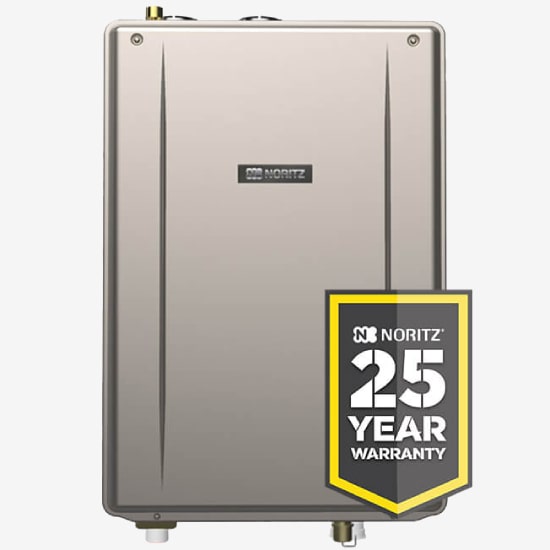
Key Features
- Dual stainless steel heat exchangers for extreme corrosion resistance.
- Steady BTU Mode to eliminate temperature fluctuations during high-temperature intake.
- Integrated recirculation pumps in select series for faster hot water delivery.
- Common venting capabilities to simplify large-scale installations.
Top Model Recommendations
The NRCR Series is Noritz’s efficiency leader, featuring an industry-leading integrated pump and a high UEF rating of up to 0.98. It uses an “auto-learning” mode to track hot water usage and optimize the pump schedule.
For those seeking a budget-friendly, easy-to-install solution, the EZ Series (specifically the EZ98) is designed to reduce installation time and costs. It features top-mounted water connections that mimic the layout of traditional tanks, making it a highly practical choice for retrofitting.
5. Vesta (VST)
Vesta is known for its high-performance condensing technology and a focus on minimizing the “cold water sandwich” effect through internal mixing valves and buffer tanks.
Key Features
- Stainless steel heat exchangers are robotically welded for structural integrity.
- Internal mixing valves that keep temperature fluctuations within +/- 0.5°C.
- 10:1 Turndown ratio for highly precise and efficient combustion.
- Self-calibration feature that adjusts the turbofan assembly based on local environmental conditions.
Top Model Recommendations
The Vesta VRP Series is their flagship efficient system, featuring a built-in Grundfos recirculation pump and an internal 0.5-gallon buffer tank for instant hot water. It achieves an impressive 0.96 UEF. For a more cost-effective option, the Vesta VRS Series provides the same high-quality condensing technology and stainless steel components (0.95 UEF) but excludes the integrated pump and buffer tank, making it a high-value choice for standard installations.
6. IBC
IBC is a Canadian-made brand specializing in high-efficiency heating solutions designed to perform reliably in extreme climates and demanding hard-water conditions.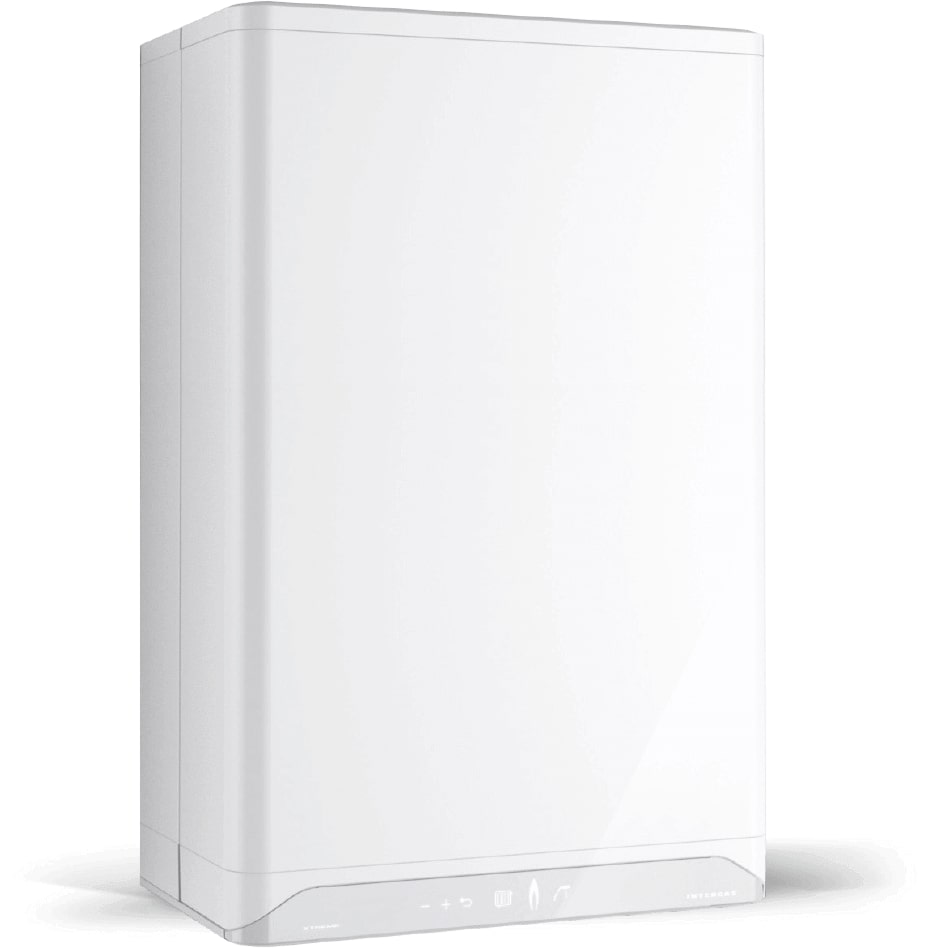
Key Features
- Patented Labyrinth heat exchanger with integrated copper waterways for superior heat transfer.
- Minimalistic design with only four moving parts, reducing the potential for mechanical failure.
- Touchscreen control display for effortless diagnostics and temperature adjustment.
- Hard water resilience: Designed to maintain flow and efficiency even in areas with significant mineral buildup.
Top Model Recommendations
The IBC SFT 199-1 is the top-tier efficiency model, offering a robust 199,000 BTU/h input and a condensing design that qualifies for maximum energy rebates. It features a single-pass heat exchanger that extracts nearly all heat from flue gases. The standard IBC SFT Series serves as the brand’s cost-friendly baseline; it uses the same reliable 4-part design and space-saving wall-mount configuration, offering homeowners a durable, long-term investment at a lower initial cost.
What Is A Tankless Water Heater?
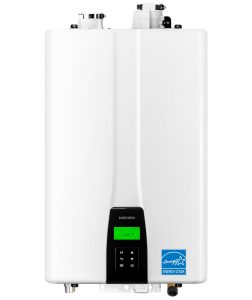
A tankless water heater can best be defined by what it isn’t. It isn’t like traditional hot water heaters, which heat cold water once it flows into a tank, and then continue to keep it hot for hours — or even days — until you are ready to use it. The process is energy-inefficient and wasteful. The water heater sizing depends on the demand of hot water for your home.
By contrast, a tankless heater avoids standby energy losses; it heats water only as needed, such as when you turn on the shower or faucet. Optionally – you can use a recirculating pump with your tankless unit for instant heat!
How Does A Tankless Water Heater Work?
- A tankless heater consists of a wall-mounted unit about the size of a suitcase, containing a burner (usually either natural gas or electric) and an internal computer. You can adjust the temperature setting by means of a thermostat.
- When you turn on your washing machine, faucet, or other hot water plumbing fixture, cold water is channeled into the tankless heater through the inlet pipe.
- The inflow of water is detected by sensors, which signals the computer to start the heating process.
- The computer sends a message to the internal burner to heat the incoming water.
- A heat exchanger circulates the water until it has reached the preset temperature indicated on the thermostat.
- The heated water flows out through an outlet pipe and makes its way along your home’s plumbing pipes to the spot where it is needed.
- The flow of hot water will continue as long as you wish, until the fixture is turned off.
Benefits Of Installing A Tankless Water Heater
The pros and cons of tankless water heaters are a lot more one-sided towards the benefits. Here are some of the pros of installing a tankless heater:
Offers Energy Efficiency. Because no standby energy losses are involved, a gas tankless water heater functions more efficiently than a hot water tank — saving energy, cutting your utility bills, and reducing your carbon footprint. Learn more about how a tankless water heater will save you money to help you decide. Natural Resources Canada reports that, on average, an Energy Star-certified water heater consumes 30 percent less energy than a conventional hot water tank. Although tankless heater installation costs more initially, they are worth it.
Produces An Endless Hot Water Supply. Another advantage of a tankless water heater is that it can produce an endless supply of hot water whenever needed. You won’t ever again have to worry about running out or using up the contents of your water heater tank. This is especially good news if you’re tired of taking cold showers because someone else has used up all the hot water!
Lasts Longer Before Needing Replacement. You can expect a tankless water heater to last 20 years or longer, as opposed to an average lifespan of 8-12 years with a tank heater. (Constantly storing hot water shortens tanks’ lifespans.) This means you won’t have to lay out the cash to buy a new one so quickly.
Saves Space In Your Home. Because a tankless water heater is a trim rectangular box — instead of a big, clunky cylinder like a hot water tank — it doesn’t take up nearly as much room. You can have your tankless heater installed almost anywhere in your home, even a closet. Just make sure there is proper venting for a gas-powered water heater.
Less Chance of Flooding. The lack of storage tank means that there’s no risk of catastrophic flooding if something were to fail in the tank. The potential for water damage to your home is greatly reduced when you choose a tankless water heater, as they don’t store large quantities of water.
How Long Do Tankless Water Heaters Last?
You can expect a tankless water heater to last 20 years or longer, as opposed to an average lifespan of 8-12 years with conventional water heaters. (Constantly heating water and storing it at the desired hot water temperature shortens tanks’ lifespans.)
This means you won’t have to lay out the cash to buy a new one so quickly. The lifespan of even the best tankless water heater will vary depending on usage patterns, water quality (such as soft vs hard), and maintenance of the unit.
Tankless vs. Heat Pump Water Heater
Gas or electric tankless water heaters and heat pump water heaters might have comparable installation and operating costs, but there are several factors that you have to consider if you’re trying to decide between the two.
These include:
- Energy efficiency: both units are highly energy efficient, and much more so than conventional water heaters
- Cost-effectiveness: the energy savings over time can help offset the higher upfront cost of both types of water heater
- Space requirements: a tankless water heater is compact and wall-mounted, whereas a heat pump water heater is larger and may require more space
- Lifespan: a tankless water heater can last up to 20 years with good maintenance, while a heat pump water heater can reliably provide water for 10-15 years
Gas. vs. Electric Tankless Water Heaters
If you’re looking for the best tankless water heater type for your home, you’ll likely be choosing between a gas and electric tankless water heater.
Electric tankless water heater: generally easier to install, as they don’t require venting or gas lines, and can be installed closer to the point of use. This is the ideal choice for smaller homes, or if gas connection installation is impractical. Depending on what your electricity costs are, it might be pricier to run over time, but will likely have a lower upfront cost.
Gas tankless water heater: these typically have higher flow rates and can cater to larger households with higher hot water demands. They do require gas connections, venting, and adequate combustion air supply, which will increase the upfront cost. However, they often have a lower operational cost (as long as the gas prices in your area remain reasonable).
What Size Tankless Water Heater Do I Need?
A key advantage of a tankless water heater is that it can produce an endless supply of hot water whenever needed. You won’t ever again have to worry about running out or using up the contents of your water heater tank. This is especially good news if you’re tired of taking cold showers because someone else has used up all the hot water!
Getting the best tankless water heater for your home will depend on the size of your household and the amount of water needed during peak hot water demand. The flow rate (GPM) is determined by adding up the flow rates in gallons per minute of all the fixtures you might use at once, such as showers, faucets, appliances, etc.
Other considerations you’ve have to make when choosing the right tankless water heater are:
- Energy source: there are many gas and electric models to choose from
- Efficiency: a more energy efficient water heater may have lower operating costs over time and help save you money
- Temperature rise: the difference between the temperature of the incoming cold water and the desired hot water temperature
- Future needs: if you’re planning on growing your family or adding on to your house in the next 20 years, you might consider choosing a unit that can accommodate future needs
Tankless Water Heater Maintenance Tips

Even the best tankless water heater will underperform if it’s not properly cared for. Proper maintenance is essential if you want to maximize the lifespan of your new tankless water heater installation. Here are some tips on how to get the most out of your tankless water heater:
- Flush the System: Sediment and mineral buildup can occur over time, affecting the performance of the unit. Flushing the system annually helps remove these deposits. Follow the manufacturer’s instructions for flushing or call in a trusted Hot Water Ottawa plumber if you’d prefer a professional to handle it.
- Inspect and Clean Filters: Tankless water heaters have filters that prevent debris from entering the unit. Regularly inspect and clean these filters to ensure unrestricted water flow.
- Check for Leaks: Regularly inspect your tankless water heater and its connections for any signs of leaks. Addressing leaks promptly will prevent potentially catastrophic water damage.
- Monitor Water Pressure: Excessive water pressure can strain the unit and lead to premature wear. Use a pressure gauge to monitor the water pressure and ensure it remains within the recommended range specified by the manufacturer.
- Check Venting System: If your tankless water heater is gas-powered, ensure that the venting system is free from obstructions and in good condition. Improper venting can lead to safety hazards, so it’s essential to inspect it regularly.
- Schedule Professional Maintenance: If nothing else, scheduling annual maintenance with a qualified technician will ensure that. They can perform a thorough inspection, clean the unit, and address any potential issues before they escalate.
Should I Choose Condensing Or Non-Condensing Tankless Water Heaters
Although the two types cost about the same to buy, condensing tankless water heaters use fuel more efficiently than non-condensing versions. The reason is that a condensing vs. non-condensing tankless water heater captures and recycles residual heat, which is leftover from the heating process. As a result, it will reduce your operating costs.
This is why we ONLY provide condensing units to the people of Ottawa.
Condensing tankless water heater = approximately 96-98 percent efficiency.
Non-condensing water heater = approximately 80 percent efficiency.
Are Tankless Water Heaters Energy Efficient?
Yes. According to Natural Resources Canada (NRCan), switching to an ENERGY STAR-certified condensing tankless unit can reduce energy use by up to 30%.
Efficiency is measured by the Uniform Energy Factor (UEF). The best condensing models today achieve UEF ratings of 0.95 to 0.98, meaning nearly 100% of the energy you pay for goes directly into heating your water.
6 Of The Best Tankless Water Heater Brands
At Hot Water Ottawa, our Kanata water heater experts recommend the following brands. They are among the best tankless water heaters on the Barrhaven market today.
Navien Tankless Water Heater
Navien is a relatively new manufacturer, which offers only two tankless water heater lines — standard and upscale. However, their highly energy-efficient products are certified by both Energy Star and LEED. They recently opened a US-based plant. There are many outstanding Navien tankless water heater reviews.
Noritz Tankless Water Heater
Noritz America is a subsidiary of Japan’s Noritz Corporation, active in the water heater field for 70 years. Their tankless water heaters boast advanced features such as Wi-Fi compatibility, dual heat exchangers, and top-mounted water connections (to permit easy replacement of your old hot water tank).
Their tankless water heaters boast advanced features such as Wi-Fi compatibility, dual heat exchangers, and top-mounted water connections (to enable easy replacement of your old hot water tank).
- Most Efficient: Noritz NRCR Series (0.97–0.98 UEF)
- Most Cost-Friendly: Noritz EZ Series (features a 25-year heat exchanger warranty)
Rinnai Tankless Water Heater
Rinnai tankless water heaters are known for their high performance, reliability, and generous warranty. This is an excellent brand when you would like to run several hot water fixtures at once. Their higher-end water heaters are certified by Energy Star, and the newest models are Wi-Fi capable.
Bosch Tankless Water Heater
Bosch is a famous, long-established engineering firm, which manufactures its residential water heaters in Europe. The company offers high-quality gas tankless water heaters at several price points.
Vesta (VST) Tankless Water Heater
Manufactured by Daesung Celtic, Vesta units offer incredible value and include a self-calibrating gas valve for easy setup.
- Most Efficient: Vesta VRP Series (includes built-in Grundfos pump and buffer tank)
- Most Cost-Friendly: Vesta VRS Series
IBC Tankless Water Heater
A proud Canadian manufacturer, IBC’s Superflow series uses a single-pass copper coil heat exchanger that is exceptionally durable to hard-water buildup.
- Most Efficient: IBC SFT 199-1 (updated condensing technology)
- Most Cost-Friendly: IBC standard SFT Series (SFT 199)
We Carry The Best Water Heaters
Now you have the facts on the best tankless water heaters. Where do you find these uber-efficient appliances? Call Hot Water Ottawa, of course. Our expert Barrhaven water heater team is here to help you choose a tankless water heater that will give you the best performance.
Not yet ready to buy? No worries! Just rent a tankless water heater.